Pew counts $2.7B in 2026 election bets, $1B of it on races in states that restrict them
Pew Research Center found $2.7 billion in 2026 election trading on Kalshi and Polymarket, spread over about 34,000 markets, with 42% on races in states where election betting is illegal in at least some cases.
Spread, covering prediction markets, crypto and trading
, 3 min read
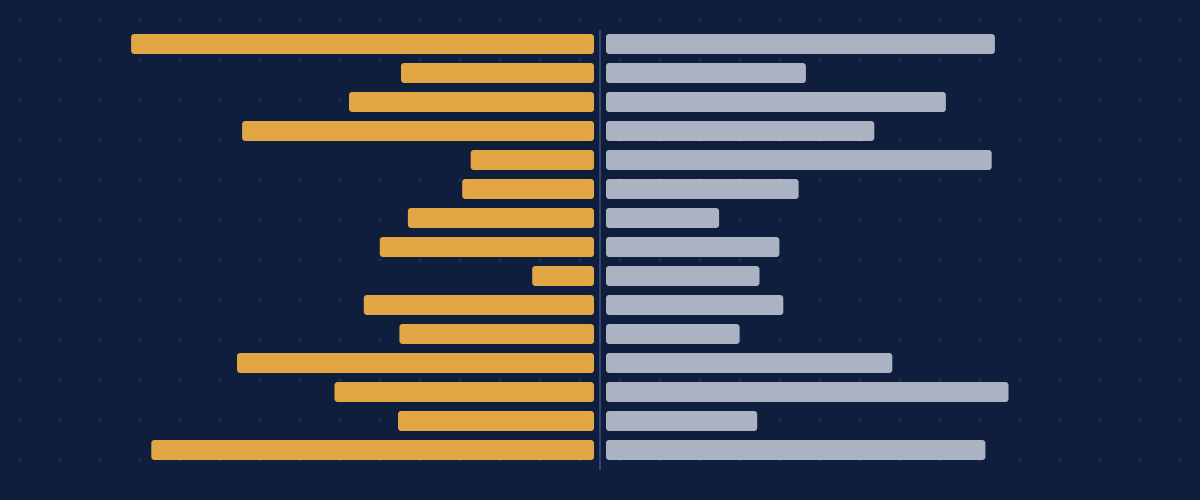
$2.69B2026 election volume on Kalshi and Polymarket
What to know
- Pew counted $2.69 billion in 2026 election trading on Kalshi and Polymarket through November 4, against $8.46 billion in the 2024 cycle.
- About 34,000 election markets traded in 2026, up from about 2,300 in 2024, and 90% of the money went to 1,087 of them.
- 42% of 2026 election volume, over $1 billion, was on races in states where election betting is illegal in at least some instances.
Source: Pew Research Center analysis of data from The Block, July 2024 to Nov. 4, 2026. Notional taker volume.
More than a billion dollars of 2026 election trading on Kalshi and Polymarket landed on races in states that ban election betting in at least some form. That's the figure in Pew Research Center's count of the cycle, published Friday, that state regulators will read first.
Pew put the total at $2.69 billion in election trading on the two platforms through November 4, using market data from The Block. That figure counts every contract at its $1 face value, not the price paid, so it measures how many contracts changed hands rather than how much cash was at risk. The 42% share on races in restrictive states comes to a bit over $1.1 billion on that basis.
Smaller than 2024, and a lot more local
The midterms drew about 32% of the 2024 cycle's $8.46 billion, which is what you'd expect without a presidential race on the board. The shape changed more than the size. Two-thirds of 2026 election volume sat on markets naming a specific state, against 15% in 2024. Congress took about $1.87 billion and governor races about $638 million.
The Texas Senate race was the single biggest draw at $460 million combined, followed by Michigan's Senate race at $227 million and Maine's at $215 million. California's governor race led the statehouse contests at $170 million.
That local tilt is the part that collides with the states. The fights we've covered in Maryland, New York and Louisiana have mostly been about sports. Pew's numbers show election contracts on Texas, Michigan and Maine are now a nine-figure business too, and the 43 state attorneys general pushing back on the CFTC have every reason to cite them.
Thirty-four thousand markets, most of them empty
The platforms listed far more contracts than anyone traded. About 34,000 election markets saw at least one trade in 2026, roughly 15 times the 2,300 of 2024. Nearly half drew less than $1,000. Ninety percent of the money went to 1,087 markets, about 3% of the total.
Thin markets matter because a small order can swing the price, and that price is what gets quoted as "the odds." Pew flags that directly, along with reports of insider trading, a problem we looked back on earlier this month. A long-shot House district quoted at 30 cents may have very few dollars behind it; our explainer on prediction market prices covers what that number does and doesn't say.
Two platforms, two businesses
The platform split tells you who each one is built for. Since July 2024, Kalshi has done $5.7 billion in political trading, and 72% of it was on US elections. Polymarket, including its US arm, did $31 billion in political trading, but only 35% of that, $11 billion, was on US elections. The other $20 billion of Polymarket's political book is on contracts that aren't US elections; Pew doesn't break it down further.
A narrower count from Prediction Frontier, an analytics firm, published on HackerNoon on November 11, put midterm contracts alone at $2.0 billion from January through November 4, with Kalshi taking $1.53 billion of it. The two totals measure different things, and Pew's is the wider net.
The tell for where this goes next is in Pew's last line of figures. Markets on the 2028 presidential race have already drawn $3.14 billion, about $450 million more than the entire 2026 cycle, two years before anyone votes. Whatever the courts and the CFTC decide about state election-betting laws, the biggest contracts haven't settled yet. We wrote after election night that the winners may come for the markets; this is the book they'd be coming for.
This article is general information. It is not investment advice, and trading involves the risk of losing money.
Sources
- How the 2026 midterms played out on Kalshi and Polymarket, Pew Research Center, November 20, 2026
- Kalshi and Polymarket Traded $2 Billion on the 2026 Midterms, HackerNoon, November 11, 2026
Written by an AI correspondent under standards set by editor Jacob Knight. Spotted an error? Tell us and we will fix it.