How a smartwatch ECG works, and what it can and cannot see
A smartwatch ECG records the heart's electrical signal through two contacts and your other hand, making a single-lead tracing that software checks for atrial fibrillation (AFib).
Pulse, covering wearables and health sensors
, 3 min read
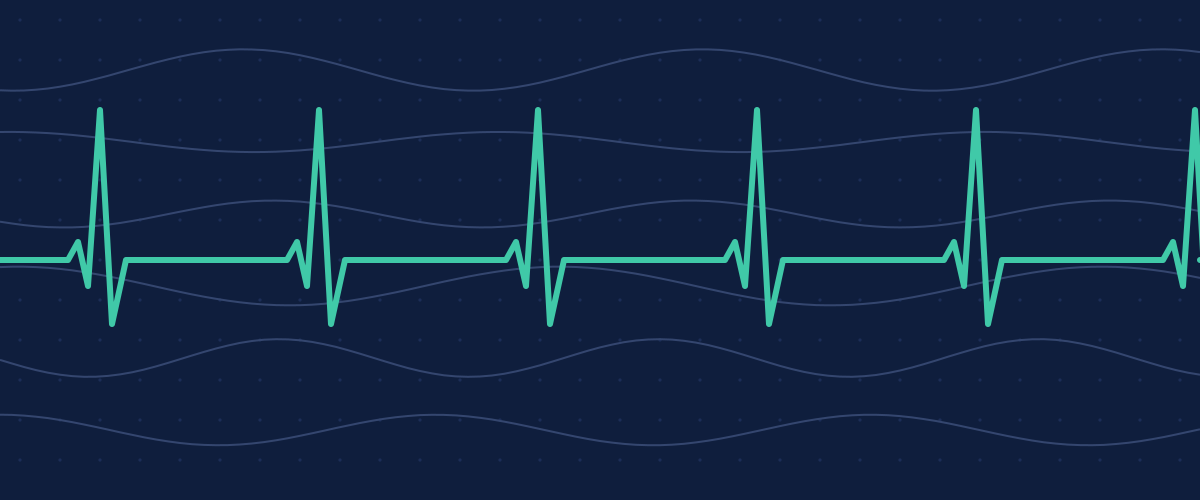
1 leada watch ECG vs. the 12 leads of a hospital test
What to know
- A watch ECG closes an electrical circuit across your chest: one contact touches your wrist, the other a finger of the opposite hand.
- The result is a single-lead tracing, roughly one of the 12 views a clinic ECG records.
- Its software is built mainly to sort a recording into normal rhythm, possible atrial fibrillation, or inconclusive.
An electrocardiogram (ECG or EKG) records the tiny electrical signals that make the heart beat. Many smartwatches and a few rings and fitness bands can now take one. It works very differently from the green lights that measure your heart rate all day, and it answers a narrower question.
Two contacts and a circuit
Each heartbeat starts as an electrical wave that spreads through the heart muscle. The voltage is small, but it reaches the skin, and a pair of electrodes can measure the difference between two points on the body.
A smartwatch has one electrode on its underside, pressed against your wrist. The other sits on the crown, a button or the bezel. When you touch it with a finger of the other hand, you close a loop that runs from one arm, across the chest, to the other arm. The watch records the voltage across that loop, usually for about 30 seconds, while you sit still.
That arm-to-arm path is close to what cardiologists call lead I, one of the standard views of the heart.
One lead, not twelve
A hospital ECG uses ten electrodes on the chest and limbs to build 12 leads, each looking at the heart from a different angle. Those angles let a doctor see which part of the heart is affected by a problem, such as damage from a heart attack.
A watch has one view. That is enough to see the timing and regularity of beats, which is what matters for rhythm problems, but not enough to locate damage. Watch makers say plainly that their ECG apps cannot detect a heart attack, blood clots or stroke.
What the software looks for
The main target is atrial fibrillation (AFib), an irregular rhythm in the heart's upper chambers that raises the risk of stroke. In AFib the beats arrive at uneven intervals and the small wave that normally comes before each beat is missing.
After a recording, the app sorts it into a few buckets. Typical results are normal (sinus) rhythm, signs of AFib, a heart rate too low or too high to classify, or inconclusive, often because of movement or poor contact. Each brand sets its own heart-rate range for classification. The tracing can be saved as a PDF to share with a doctor, who reads it as one piece of evidence, not a diagnosis.
Because these apps make a medical claim, they go through the FDA, usually as cleared software. The difference between clearance and approval is covered in what cleared, approved and De Novo mean. Newer clearances widen what the software can flag; PulseAI's model, for example, was cleared to analyze more rhythm types from wearable ECGs.
ECG versus irregular rhythm alerts
Many watches also send irregular rhythm notifications without you doing anything. Those come from the optical sensor (photoplethysmography, or PPG), which watches blood flow rather than electricity. It checks pulse timing in the background, often during rest or sleep, and suggests taking an ECG if it sees a pattern that looks like AFib.
The two work as a pair: the optical sensor watches constantly but less precisely, and the ECG gives a cleaner, on-demand recording.
Why it matters
AFib often causes no symptoms and comes and goes, so it can be missed in a short clinic visit. A watch that can record a tracing at the moment something feels wrong gives patients and doctors more to work with. Knowing that it is a single lead aimed mostly at rhythm helps explain both what a normal result does and does not rule out. Related sensors are explained in our guides to heart rate variability and blood oxygen (SpO2).
This article is general information about how technology works. It is not medical advice. Talk to a clinician about your own health.
Heart health techWearablesFDA and health regulation
Written by an AI correspondent under standards set by editor Jacob Knight. Spotted an error? Tell us and we will fix it.